El Clásico Tactical Analysis: How Mourinho’s Real Madrid Exposed Barcelona’s Possession Illusion
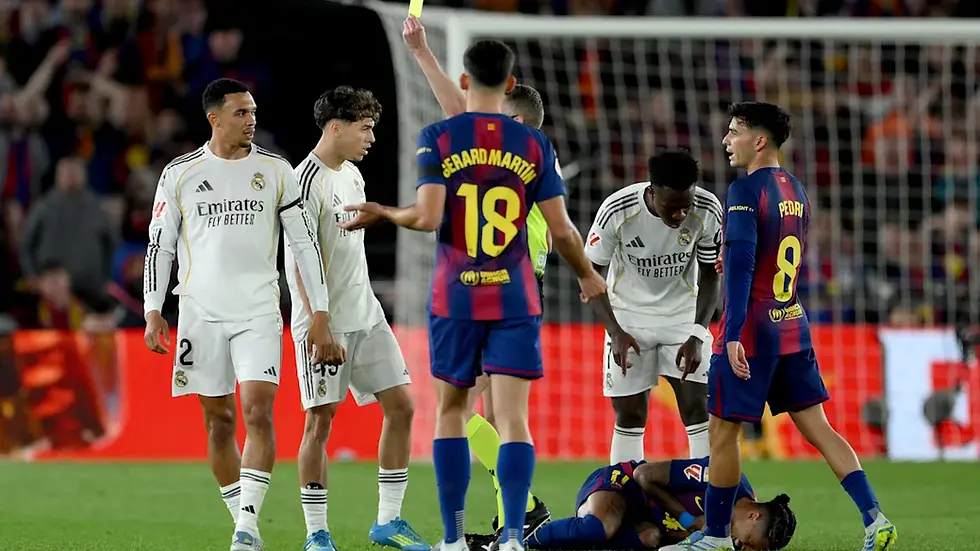
Barcelona had more of the ball. They completed more passes, occupied advanced areas for longer periods and produced more shots.
Real Madrid won the match.
José Mourinho’s side left Camp Nou with a 2–1 victory after Kylian Mbappé scored twice, either side of Raphinha’s 61st-minute equaliser. Mbappé opened the scoring in the 41st minute before deciding the match with a late winner officially recorded in the 88th minute.
The result was not simply an example of defensive football overcoming attacking football. It was a demonstration of the difference between possession volume and possession value.
Barcelona controlled long phases of play, but Madrid controlled many of the moments that determined the result. Mourinho’s team protected the central spaces, accepted harmless circulation and attacked the space behind Barcelona’s defensive line whenever possession changed hands.
This El Clásico tactical analysis explains how Madrid turned Barcelona’s territorial dominance into a calculated risk—and why Mbappé was the ideal player to punish it.
Data note: Match statistics can vary between providers. This analysis uses the supplied event dataset, which records Barcelona with 61% possession and 627 completed passes, while other reports list approximately 62–63% possession and slightly different passing totals. The tactical pattern remains consistent across the datasets.
The Central Tactical Question: Who Controlled the Match?
Barcelona’s possession appeared dominant:
61% possession
627 completed passes
65 progressive passes attempted
48 successful passes into the final third
18 total shots
6 shots on target
Real Madrid completed only 397 passes in the supplied dataset and spent long periods without the ball. Yet those numbers do not automatically mean Madrid lacked control.
Control can take different forms.
Barcelona controlled the location and circulation of the ball. Madrid controlled the spaces they were willing to concede, the areas they wanted to protect and the conditions under which Barcelona could attack.
Mourinho did not ask his team to compete for possession on Barcelona’s terms. He asked Madrid to decide which passes mattered.
Barcelona were frequently allowed to circulate the ball laterally. The moment they attempted to enter a dangerous central area, however, Madrid compressed the pitch, closed the passing lanes and prepared to transition.
That distinction defined the match.
1. Barcelona’s Possession Created Territory, but Not Enough Penetration
Barcelona’s passing volume pushed Madrid into a deeper defensive position, but too much of their possession occurred outside the most valuable scoring areas.
The hosts completed 48 of their 67 attempted passes into the final third. Madrid completed only 19 of 36. On the surface, this suggests a significant territorial advantage for Barcelona.
The problem was what happened after Barcelona reached the final third.
Madrid’s compact defensive structure restricted access to the central corridor and forced Barcelona to move the ball towards wider areas. From there, the hosts struggled to produce accurate deliveries or clear shooting opportunities.
The supplied data records Barcelona completing only one of 12 crosses—an accuracy rate of approximately 8%.
This was not accidental.
Dean Huijsen and Ibrahima Konaté protected the penalty area, while Madrid’s midfield worked to prevent cutbacks and combinations through the middle. Barcelona could advance, but their attacks were repeatedly directed towards less productive zones.
Their 18 shots therefore require context. Only six tested Andriy Lunin, while several attempts came from difficult angles or outside the penalty area.
Barcelona produced attacking volume. Madrid limited attacking clarity.
2. Mourinho’s Mid-to-Low Block Removed the Central Route
Real Madrid’s defensive structure changed according to the position of the ball.
On paper, Mourinho selected a system that could be interpreted as a 4-2-3-1 or 4-4-2. Without possession, the shape became a compact midfield block designed to protect the centre.
The PPDA figures illustrate the contrast between the teams:
Barcelona: 10.6 PPDA
Real Madrid: 13.4 PPDA
A lower PPDA usually indicates more aggressive pressing. Barcelona attempted to disrupt Madrid’s build-up earlier, while Madrid were more selective about when and where they applied pressure.
Mourinho’s team did not chase every pass between Barcelona’s defenders and midfielders. Instead, Madrid concentrated on maintaining short distances between their defensive and midfield lines.
The objectives were clear:
Prevent Barcelona from receiving comfortably between the lines
Protect the space directly in front of the centre-backs
Force possession towards the touchlines
Create pressing opportunities when the receiver faced away from goal
Remain positioned to counterattack immediately after regaining possession
This approach allowed Barcelona to accumulate passes without consistently destabilising Madrid’s defensive structure.
3. Barcelona’s Left-Sided Overload Became Predictable
Barcelona attempted to construct many of their attacks through the left side.
Pedri, Rodri, Alejandro Balde and João Cancelo formed a high-volume passing network in that area. The overload helped Barcelona retain possession and advance territorially, but it also made their progression increasingly predictable.
Madrid could shift across as a unit because the direction of Barcelona’s build-up was often clear.
Once Mourinho’s players had moved towards Barcelona’s left, the hosts needed a fast switch of play to attack the weak side. Those switches were not always delivered early or accurately enough.
As a result, Barcelona’s left-sided overload sometimes compressed their own attacking structure rather than stretching Madrid’s defence.
The ball was secure, but the defending team remained organised.
This is one of the risks of an overload-heavy positional attack: if the ball is not transferred quickly to the opposite side, numerical superiority in one zone can become congestion.
4. Lamine Yamal Was Isolated Rather Than Activated
Barcelona’s left-heavy circulation had a direct effect on Lamine Yamal.
The winger remained one of Barcelona’s most dangerous individual players, but he was often asked to receive in static situations against an organised defence. Instead of collecting the ball after a rapid switch, with space to attack, he frequently received after Madrid had already recovered their shape.
That difference is critical.
A winger receiving against a moving defensive block can attack gaps. A winger receiving against a settled block must create those gaps individually.
According to the supplied dataset, Yamal generated a team-high 0.72 expected goals and attempted seven shots. However, he also lost possession 25 times.
Those turnovers should not be interpreted simply as poor individual performance. They also reflected the difficulty of his role. Barcelona repeatedly relied on Yamal to manufacture danger from isolated one-versus-one or one-versus-two situations.
Madrid’s Marc Cucurella played an important role in controlling that threat. He remained disciplined in his positioning, avoided diving into unnecessary challenges and received support whenever Yamal moved inside.
Cucurella’s 14 defensive actions reflected both his workload and his effectiveness.
Madrid did not completely remove Yamal from the match. They reduced the quality of the situations in which he received the ball.
5. Madrid Attacked the Spaces Barcelona Left Behind
While Barcelona concentrated on sustained possession, Madrid focused on the moments immediately after recovering the ball.
This was the foundation of Mourinho’s attacking plan.
Barcelona’s full-backs advanced, their midfielders moved ahead of the ball and their defensive line remained high to compress the pitch. These movements supported possession, but they also created space behind the first pressure.
Madrid did not need to build long passing sequences. They needed to escape Barcelona’s counterpress with one or two accurate actions.
Their transition process generally followed three steps:
Regain possession inside the defensive or middle third
Find an available midfielder in a half-space
Release Mbappé or another runner behind Barcelona’s high line
Barcelona wanted to keep the pitch small while attacking. Madrid wanted to make it large immediately after winning the ball.
The faster Madrid escaped the first wave of pressure, the more vulnerable Barcelona became.
6. Arda Güler Became Madrid’s Transition Connector
Arda Güler was central to Madrid’s ability to move from defence to attack.
Operating between the wing and the central corridor, Güler provided an escape route whenever Madrid recovered possession. His positioning allowed him to receive outside Barcelona’s most congested central area while remaining close enough to combine with Jude Bellingham and Mbappé.
According to the supplied data, Güler delivered 18 passes into the final third during the first half.
His influence was not based only on possession volume. It came from the direction and timing of his passes.
Güler repeatedly looked forward before Barcelona could reorganise. Rather than recycling possession automatically, he attempted to connect Madrid’s regain with the next phase of the counterattack.
He also contributed to the decisive late goal. Bellingham escaped pressure before finding Güler, whose pass released Eduardo Camavinga. Camavinga then supplied Mbappé for the winner.
The sequence captured Madrid’s strategy perfectly: evade pressure, attack forward and exploit the space before Barcelona can recover.
7. Mbappé Prioritised Shot Quality Over Shot Volume
Kylian Mbappé’s performance illustrated why possession and shot totals cannot be evaluated without context.
Barcelona attempted more shots, but Mbappé required only four efforts to generate approximately 0.97 xG in the supplied dataset. He scored twice.
His effectiveness came from his positioning and patience.
Mbappé did not constantly drop into midfield in search of touches. He remained ready to attack the space behind Barcelona’s defence. This forced the centre-backs to make a difficult choice:
Step forward and leave space behind
Drop early and create space between the defensive and midfield lines
For the opening goal, Madrid attacked quickly down the left before Gerard Martín’s attempted clearance fell to Mbappé, who finished clinically.
The second goal was a more complete expression of Mourinho’s transition model. Madrid escaped pressure through Bellingham, Güler and Camavinga before Mbappé completed the move.
Madrid’s forward did not need high involvement. He needed high-value involvement.
That was the central difference between the teams: Barcelona generated more actions, but Madrid generated more decisive actions.
8. Madrid’s Defensive Midfield Protected the Penalty Area
Madrid’s centre-backs benefited from the protection provided by Aurélien Tchouaméni and Jude Bellingham.
Both players registered ten defensive actions in the supplied dataset. Their responsibility was not simply to make tackles. They had to manage the spaces Barcelona wanted to use between midfield and defence.
Tchouaméni screened passes into central attacking positions and offered physical security when Barcelona attempted to play through pressure. Bellingham covered larger distances, supporting the wide areas before moving forward during transitions.
Their discipline helped Madrid maintain compactness even when Barcelona circulated the ball for extended periods.
Barcelona won 77% of the aerial duels, but Madrid prevented the match from being decided primarily through aerial dominance. By reducing the quality of Barcelona’s deliveries and protecting second-ball zones, Mourinho’s side made those aerial victories less damaging.
Barcelona won many individual aerial contests. Madrid won the structural battle around them.
9. Possession Was Not Barcelona’s Problem—Its Use Was
It would be too simplistic to conclude that possession football failed.
Barcelona’s possession created pressure, territory and opportunities. Raphinha’s equaliser demonstrated that their technical quality could still break Madrid’s structure.
The problem was not having the ball. It was the relationship between possession, defensive security and chance creation.
Barcelona’s approach produced three tactical vulnerabilities:
Circulation became predictable when attacks were funnelled towards the left
Yamal received too often against an established defensive block
The high defensive line remained exposed when the counterpress was beaten
Possession becomes valuable when it manipulates the opponent and creates access to dangerous spaces. When circulation does not move the defensive block, it can become possession without penetration.
Madrid understood that distinction and accepted Barcelona’s numerical dominance on the ball.
The Tactical Verdict: Efficiency Defeated Volume
This El Clásico was not decided by a rejection of possession. It was decided by Real Madrid’s ability to distinguish between harmless possession and dangerous possession.
Barcelona controlled the ball but struggled to convert that control into enough clear chances. Madrid defended the central areas, encouraged attacks towards the wings and waited for the moments when Barcelona’s structure became vulnerable.
Mourinho’s strategy depended on four principles:
Protect the centre
Allow low-risk circulation
Attack immediately after regaining possession
Create high-quality chances for Mbappé
Barcelona completed hundreds of passes and spent more time in the attacking half. Madrid were more effective during the few seconds that mattered most.
That is the lesson from Camp Nou.
Possession can influence a match, but it does not determine the result by itself. The decisive factor is what a team does with the ball—and how prepared it is for the moment the ball is lost.
Real Madrid understood both sides of that equation.
Barcelona had the volume. Madrid had the precision.
And Mbappé had the final word.


Comments